Stories of Change


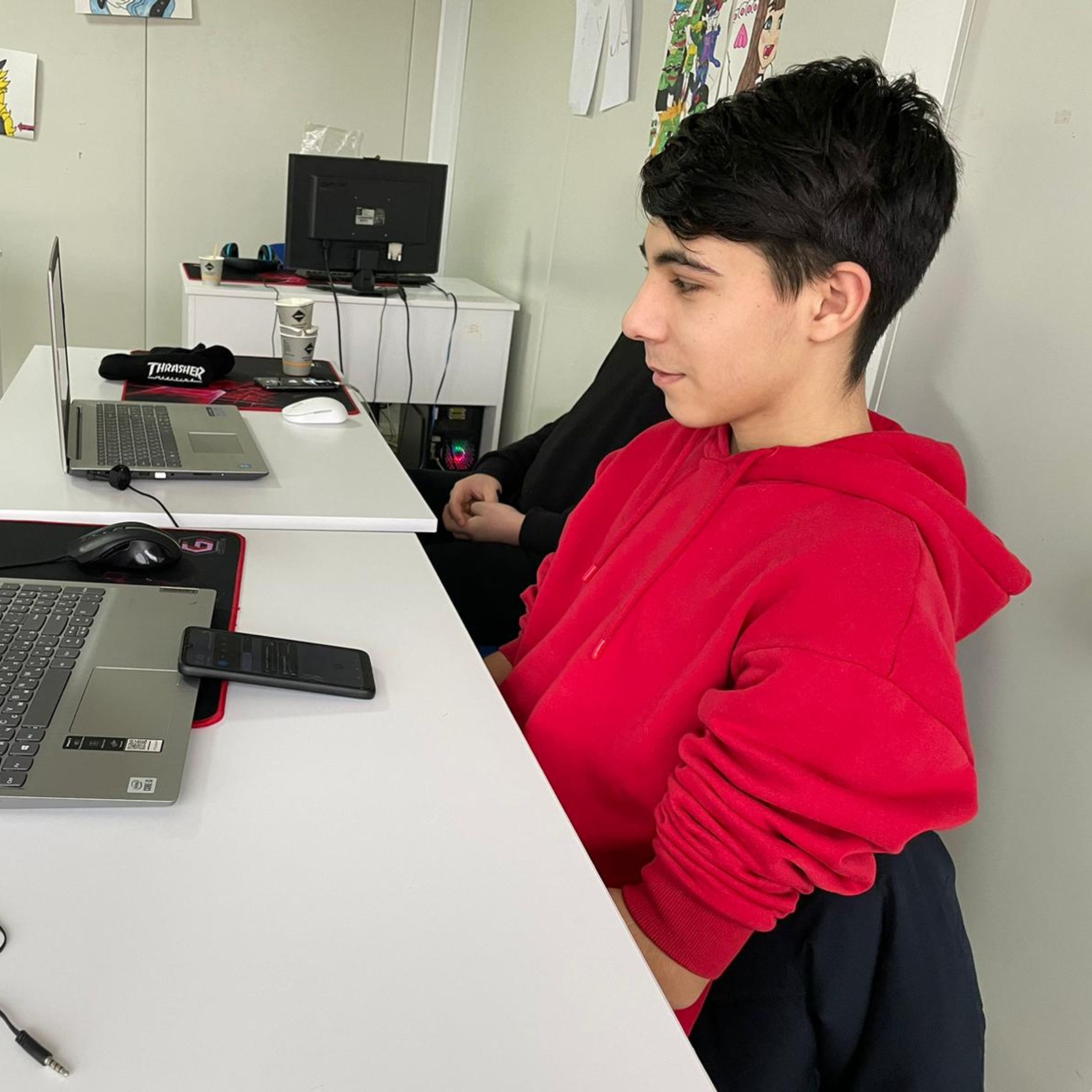
Nicolae at the Anastasis Center

An Empowered Student

When war intensified in Ukraine’s Kramatorsk region in 2022, 16-year-old Nicolae and his family were forced to flee to Bălți, Moldova, leaving behind their home and familiar life. Like many displaced students, Nicolae faced the daunting challenge of continuing his education in a foreign country while dealing with the trauma of conflict.

Determined to pursue his studies, Nicolae found hope at the Anastasis Educational Center. “At first, everything seemed impossible. I felt lost in a new country, but the support from the Center helped me adjust and move forward,” he shared. The Center provided not just educational opportunities, but a comprehensive support system that proved crucial for his adaptation and growth.

Despite the language barriers and cultural adjustments, Nicolae’s dedication to learning never wavered. Through the Center’s innovative online learning program, he successfully completed his 9th-grade studies. The Center’s holistic approach—combining academic support with psychological counseling and material support—created an environment where Nicolae could thrive both academically and personally.

Education became Nicolae’s gateway to community integration and personal development. Through the Center’s programs, he discovered the empowering world of volunteerism. “I felt strong and confident that I could contribute to change,” Nicolae reflected. “Through volunteering, I learned how important it is to support one another.” This experience empowered him to transfer the help and compassion he received to the other members of his community.

Nicolae’s educational journey took an exciting turn in 2023 when he enrolled in vocational courses in auto mechanics. His commitment to learning caught the attention of a local auto service center during his internship, leading to a part-time job offer. “Work motivates me to exceed my limits and take care of myself and my family,” he said proudly.

Today, Nicolae exemplifies the resilient spirit of student activism and determination. He balances his morning studies with afternoon work at the auto service, supporting his family while building his future. His story showcases how access to education, combined with proper support systems, can help displaced students not just survive but thrive in challenging circumstances.

*The Anastasis Educational Center is run by our local partner, Diaconia, and aims to help Ukrainian refugees heal and rebuild their lives. At the Center, program participants can receive psychological support, attend vocational classes, partake in fun activities and access computers to attend online school.

This story is possible thanks to CWS’ membership in ACT Alliance, a global coalition of churches and agencies engaged in development, humanitarian assistance and advocacy. It is also supported by the generosity of UMCOR. You can learn more about the work we are doing in Moldova to support Ukrainian refugees by clicking here.
Stories of Change


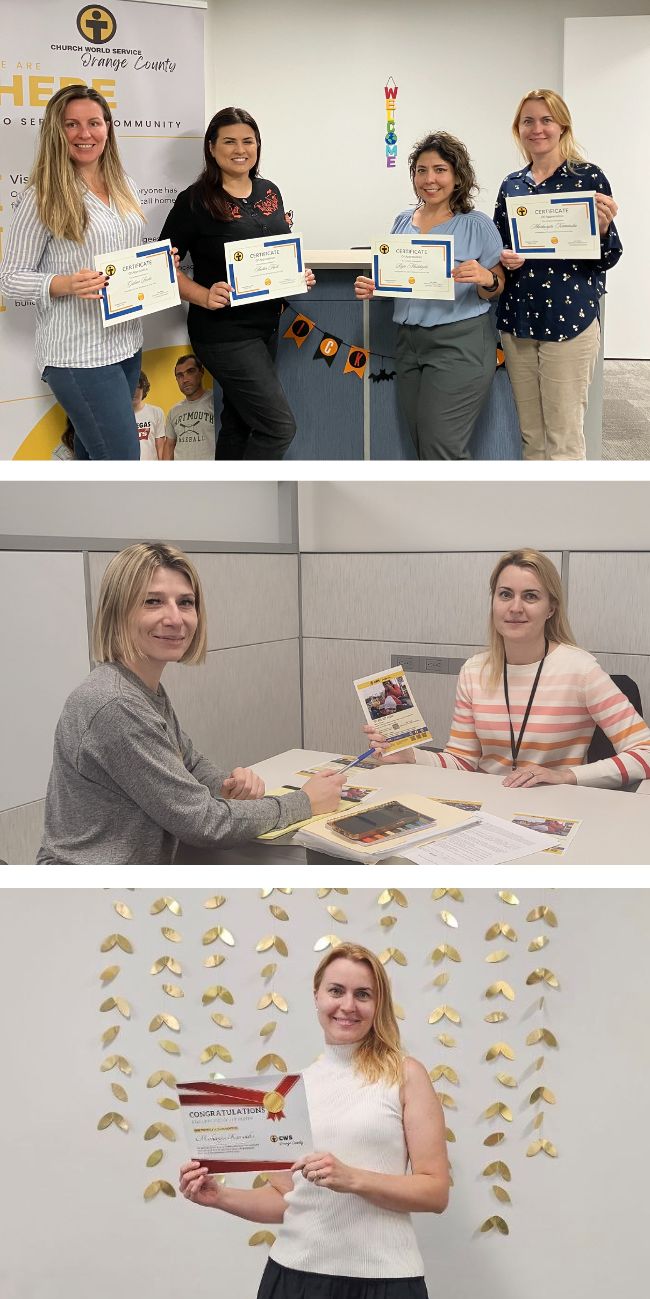
First photo: Marharyta with CWS Orange County colleagues celebrating 1 year of dedicated service. Second Photo: Marharyta with a client during her time as a case manager. Third Photo: Marharyta honored as Employee of the Month, celebrating 2 years with CWS (October 24).

A Journey of Resilience: From Ukraine to the United States

I never imagined that I would be forced to leave my home; the place where I grew up, got married and began raising my family. But in 2015, as conflict engulfed eastern Ukraine, I found myself in the middle of a war zone, living just 200 kilometers from Donetsk. Every day brought new fears—the sounds of conflict were getting closer, and I constantly worried that my city would be bombed like Crimea and the Donetsk region had been. The fear of losing everything was overwhelming, but the thought of raising kids in such uncertainty was even worse. 

This blog is my story; how we rebuilt our lives in a foreign county, eventually moved to the United States and found a way to make a difference even in the face of adversity. I would like to share the challenges we faced, the opportunities that came our way and how I used my financial expertise to help vulnerable people, all while rediscovering my own strength. 

We left Ukraine with only hope to find safety in Poland. Those early years were tough—we did not speak the language; we had no family nearby and the future seemed uncertain. We began to rebuild our lives, adapt to new culture and started learning Polish and English. After three years in Poland, we decided to move to the United States.  

 The first year in the U.S. was perhaps the most challenging. I had worked in banking for eight years, but in the new county, I found myself starting from scratch. Still, I knew that for the sake of my daughters—my two little princesses, aged eight years and four months old at the time—I had to keep going.  

To that end, I enrolled in a community college and pursued an accounting certification. Despite already holding a Master of Science degree in Mathematics and Finance, I wanted to continue expanding my knowledge. At the same time, I began studying for the Certified Public Accountant (CPA) exam and became a CPA candidate.  

In 2022, I applied for a position as a case manager at Church World Service Orange County to support Ukrainian refugees in the U.S. I was fortunate to be given the opportunity to help more than 100 individuals navigate the challenges of adapting to a new county.  It was incredibly fulfilling to know that I could make a difference in people’s lives during such difficult times.  

Though I loved my work as a case manager, an opportunity arose that aligned more closely with my professional expertise: a position in accounting. I was thrilled to return to finance, a field I am passionate about, but I did not leave behind my desire to help others.  

In my role, I feel fulfilled knowing that my work helps CWS achieve its mission of assisting those in need. Even though I am no longer working directly with refugees, my work behind the scenes allows me to make a positive impact. I am inspired by the opportunity to contribute to a company whose mission aligns with my personal values. As an accountant in a nonprofit organization, my role goes beyond the numbers; it directly impacts vulnerable individuals and families who rely on our services. Recently, I’ve started working more closely with coworkers, assisting them with finance-related questions and providing training on financial processes. These trainings cover essential topics such as expense management, credit card receipts and procurement processes, helping to ensure that financial operations run smoothly.  

One of my most fulfilling responsibilities is in assisting individuals facing housing insecurity. This includes rental assistance and other emergency financial support. Ensuring that these payments are accurate and timely is crucial for families depending on us to handle unexpected hardships. It’s incredibly rewarding to see how my work as an accountant translates into direct help for those in need, and I’m grateful for the opportunity to play a part in making a difference in the community.  

 My journey from Ukraine to the United States has been filled with challenges, but it has also been a story of growth, adaption, resilience and meaningful impact on others. I am grateful for CWS for every opportunity I have had to grow, adapt and help others along the way.  

Marharyta Kaminska is the Transactional Lead Accountant with CWS Orange County. To learn more about the work of CWS Orange County, click here. 


5 Ways to Reduce Your Carbon Footprint


November 14, 2024

Climate change is a pressing global crisis, the impacts of which are already visible in record-breaking heat waves, catastrophic hurricanes and extreme weather events worldwide. Our carbon footprint- the total greenhouse gasses we release through our activities- contributes to this rapidly changing climate. By reducing our carbon footprint, we contribute to a safer, more resilient environment and help ensure that …

A Path to Resilience in Cambodia


November 13, 2024

In the rural village of Sala Visai, located in Cambodia’s Kampong Thom province, the delicate balance between people and nature has been nurtured for generations. The community, made up of smallholder farmers, indigenous groups such as the Kouy people and forest-dependent families, has long depended on the land’s resources to survive. From agriculture and fishing to forest-based livelihoods, their way …

Congressional Refugee and Immigration Priorities Post-Election


Church World Service is a 78-year old humanitarian organization representing 37 Protestant, Anglican, and Orthodox communions, as well as refugee resettlement, home study and post release services, and asylum seeker case management offices and affiliates across the United States. As we prepare for a presidential administration that promises to deport immigrants en masse and restrict access to safety and legal …

Stories of Change


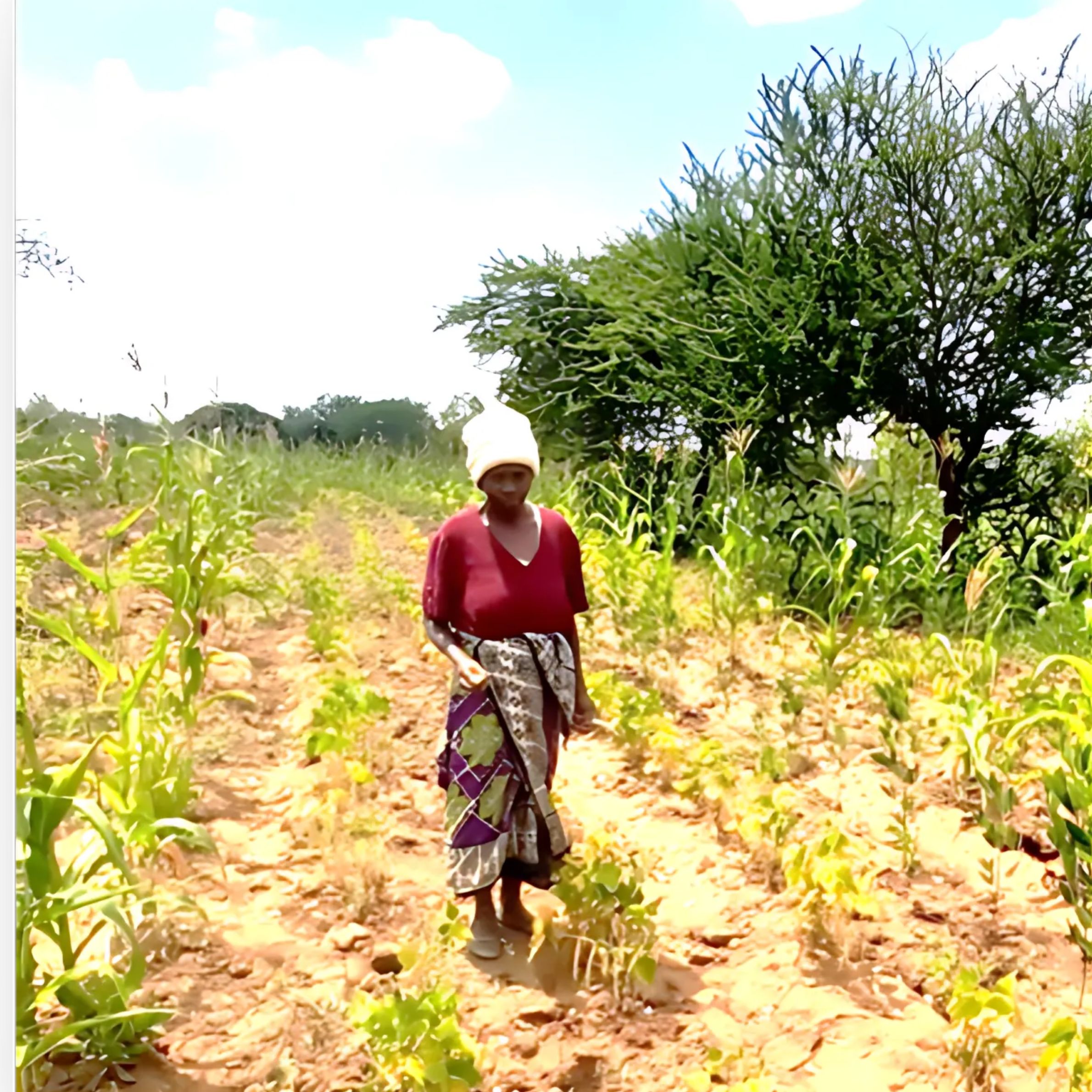
image of Margaret Kitheka

“I remember that day, as if it was a dream”

“I remember that day, as if it was a dream… like a drama…” Margaret Kitheka states, as we begin a conversation about her unexpected ascension to the leadership position of her self-help group, where she now sits as the group secretary. The following text is Margaret’s retelling of her experience becoming a leader in this program:

With the CWS project this year, we underwent training on the production of crops on our individual farms and, during one of the follow-up meetings, one of the members proposed that I host the community demonstration plot on my farm. As a middle-aged woman whose husband has been imprisoned for several years and raising her children on my own, I was surprised that the community members would select my farm to host the demonstration. I wasn’t sure at first, but a firm reminder from our Crop Production Facilitator (CPF) of the progress I had made throughout the season made me accept, albeit half-heartedly. This decision changed my life, literally. 

As we dug the demonstration farm during our weekly visit with our CPF, I made sure that the CPF would spend a little extra time on my farm, and he helped me scout the common pests and identify the best place to set up terraces. Whenever I visited my neighbor’s farms, I would make the effort to help them to scout their land, encourage them to also dig their Mandala Gardens and to save up the leftovers for the compost heap. Although I wasn’t awarded, my name was mentioned as one of the best performers in our entire group, not once but twice! 

One day, CWS staff brought our area officer in charge of all women and self-help groups, Madam Rose. She spoke to us about the importance of strong leadership in making groups succeed. She reminded us that a good leader is one who starts by leading him or herself, by following the instructions of what we have learned and by always helping others with work, so we do not leave anyone behind. 

When Madam Rose looked at our records, I realized there was a lot that could be done to make our group strong and to reduce in-fighting. What I realized as she spoke, was that the idea of a leader I had in mind—someone bold, a good speaker, someone who can command people to listen to them, someone well-educated—was very different from what she was saying: someone humble, who is able to complete their work quickly and help others, someone who asks questions and shares information with members swiftly, someone who remembers and reminds others of what they had agreed to do. 

The more she spoke, the more I realized that the type of leader she was describing was me!  When she asked for volunteers to the executive committee to lead the group, I was not surprised when those who I expected to volunteer to lead, raised their hands for the position of chair and treasurer. But when it came to the secretary position, most of the members who were nominated to do so, chose not to. I don’t recall exactly why I raised my hand. For a few moments, even the other group members did not seem to notice that I had raised it.

Before I could change my mind, Madam Rose asked me to stand up and I was whisked away to a separate part of the house where I could not see what was happening. As I waited, the doubts came back; I am not well educated, I am not wealthy, I do not have a husband…it was too late. When I tried to change my mind by going back to the group proceedings, they asked me firmly to go back until I was called back. 

After what felt like an eternity, our teacher Mwikali came to collect me. I tried to read her face, but she was not smiling at all. When I got to the group, Madam Rose announced the new office holders, and I was selected as the secretary by the members. I heard a few of them say I do not see well, but I interjected that I had perfect eyesight. I decided to own up to the fact that I am not very well-read, but our teachers told us that they would train us and help us to adapt to the new position. 

As we speak, I have been included as one of the bank signatories for our group account. I have read the minutes in my local language and work with my son to translate anything required in English. My new role did not stop me from working hard on my farm. As I listened to the December list of best performers, my name was called second, meaning that next time, if I work hard and continue to support my neighbors, I shall take up the first place! 

I thank CWS for the confidence they have given us, the knowledge to change our individual lives, to change our work as groups and to influence our neighbors so that we can all together fight this climate change. 

To learn more about CWS’ work in Kenya, click here. To learn more about how CWS works with communities around the world to adapt to climate change, click here.


Stories of Change


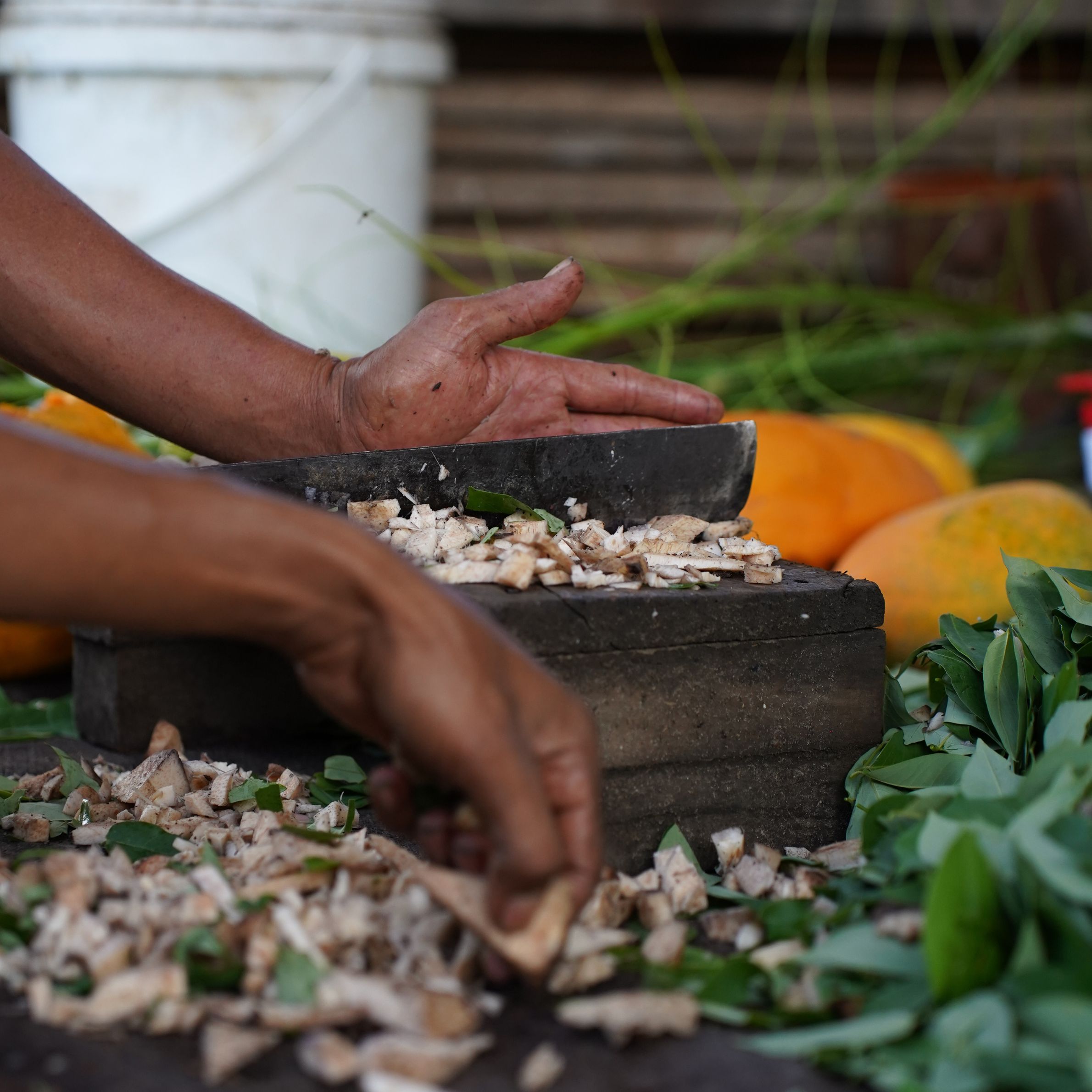
DREAM program participant making organic components

Mama Sardina Changes with the Environment

In the vibrant hills of West Nusa Tenggara, Indonesia, Mama Sardina tends to her crops with care and determination. Mama Sardina Malafu is a 40-year-old woman from Camplong, a dedicated farmer, and a member of the Ester Dinar women’s farming group. This group of 18 women is committed to their farming practices and to learning and adopting sustainable agricultural methods. For Mama Sardina, farming is not just a livelihood; it’s a way of life.

Recently, PMPB, CWS’s local partner in the region, visited the Ester Dinar farmer group at their communal house, just 100 meters from Mama Sardina’s garden. As she shared her story, Mama Sardina demonstrated the use of bokasi fertilizer, which the group produces using a special storage tank, locally known as “Ufo.” As she sprinkled fertilizer on the chili and tomato plants growing behind her house, she explained, “We store fertilizer in this Ufo, so it’s safe. If we want to plant, we just take it from here.”

The Ufo was provided by the local Animal Husbandry Service, and it has become a vital resource for the women. “After receiving training on bokasi fertilizer and vegetable pesticides from PMPB and CWS, we started producing it together. Relying solely on government-subsidized fertilizer is not enough, so this has been very helpful for us,” Mama Sardina added.

The Ester Dinar farmer group is one of many in Camplong II Village that benefits from government subsidies of two different kinds of fertilizers. In 2023, each member received one 40 kg sack of each type at a subsidized price. However, due to limitations, this year, the amount has been reduced to 30 kg per person. To manage this shortfall, the group decided to increase their production of bokasi fertilizer. “We plan to continue producing bokasi and even explore selling it abroad to improve our economy, both at home and as a group,” Mama Sardina shared, filling a spray bottle with vegetable pesticide she had prepared earlier.

Mama Sardina’s corn garden, also located near the group house, requires constant attention. “We learned how to make this pesticide through training with PMPB and CWS. When we notice damaged leaves or pests like caterpillars, we spray the plants to protect them,” she explained. The training also involved hands-on workshops where the women learned to produce pesticides themselves, equipping them with the tools they need to reduce crop failure risks.

Living in a high-altitude area means that Mama Sardina must monitor her crops closely, especially during periods of insufficient rainfall. “Caterpillars and other pests become more problematic when the rain is scarce, and some plants may fail. But with what we’ve learned, we try to minimize these risks. Even if the harvest isn’t large, at least we can reduce the chances of complete crop failure.”

As the environment changes, Mama Sardina and her fellow farmers are changing with it, ensuring their way of life remains sustainable and resilient. 

To learn more about how CWS works with communities around the world to adapt to climate change, click here.


CWS Comment on the “Securing the Border” Final Rule


November 6, 2024

Church World Service Comment on the Final Rule by Departments of Justice and Homeland Security on Securing the Border; USCIS Docket No: USCIS-2024-0006; A.G. Order No. 6053-2024 Church World Service (CWS) submits this comment in opposition to the Department of Homeland Security (DHS) and the Department of Justice (DOJ)’s final rule on Securing the Border (“STB Rule”), published on October …

Following Election Results, CWS Reaffirms Commitment to Immigrant and Refugee Neighbors, Vulnerable Families Worldwide


Contact: media@cwsglobal.org Following Election Results, CWS Reaffirms Commitment to Immigrant and Refugee Neighbors, Vulnerable Families Worldwide Washington, D.C.– In response to the news that Donald Trump has been elected for another term to the office of President of the United States, Church World Service President and CEO Rick Santos issued the following statement: “As we prepare to usher in a …

Top Five Ways to Take Action in Support of Refugees and Newcomers Before Trump Takes Office


Donald Trump has won the presidential election. The incoming Trump administration has stated plans to diminish or dismantle the U.S. Refugee Admissions Program, end crucial alternative humanitarian pathways, and separate families via mass deportation. During Trump’s first term, his efforts to target newcomer communities were slowed by Congress, courts, and effective organizing efforts by people across the country committed to …