In response to late‑December 2025 fighting along the Cambodia–Thailand border, HEKS/EPER Cambodia and CWS rapidly delivered emergency shelter and protection supplies to 1,550 newly displaced households sheltering in overcrowded pagodas and schools, helping reduce exposure and public‑health risks while restoring safety and dignity.
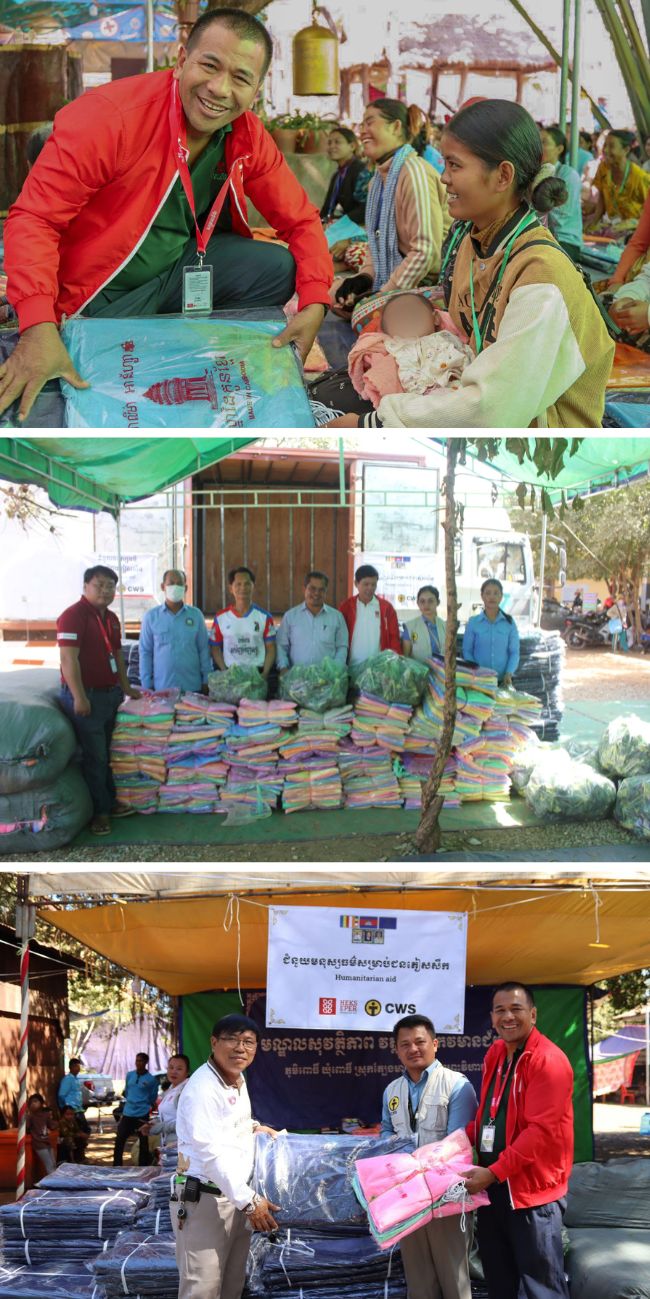 In late December 2025, fighting along the Cambodia–Thailand border again forced thousands of families from their homes in search of safety in nearby pagodas, schools and temporary shelters. Conditions at the makeshift sites were overcrowded and exposed, leaving displaced families—many with young children—without adequate protection from the elements or from rising public‑health risks, particularly mosquito‑borne diseases.
In response, HEKS/EPER Cambodia, in close partnership with CWS, launched a rapid emergency action on December 24, 2025 to meet these urgent shelter and protection needs. Together, we mobilized and delivered essential non-food items to three major displacement sites across Oddar Meanchey and Preah Vihear provinces.
Providing Support for Displaced Households
Over a single rapid intervention window, the joint response supported 1,550 households, providing each family with critical supplies, including one tarpaulin for immediate shelter, one mosquito net to reduce risks of dengue fever and malaria and one rope for securing temporary structures.
In total, the response supported 1,550 displaced households across three sites, including:
- Trav Keat Pagoda (Preah Vihear – Kulen): 426 households
- Pour Keo Meanchey Pagoda (Preah Vihear – Tbeng Meanchey): 374 households
- O Krouch Secondary School (Oddar Meanchey – Trapeang Prasat): 750 households
These sites quickly became critical safe spaces for families who arrived with few possessions and limited means to rebuild shelter on their own. The tarpaulins provided cover from sun and rain, while mosquito nets offered immediate protection—particularly important for children, pregnant women and elderly individuals who are most vulnerable to vector‑borne illnesses during displacement.
A Coordinated, Needs‑Driven Response
Field teams from HEKS/EPER led site‑level coordination, engaging directly with camp management committees, community leaders and displaced households to organize distributions. CWS supported procurement and resource mobilization, ensuring supplies arrived quickly and met the identified needs.
Both organizations worked closely with the National Committee for Disaster Management (NCDM) and Provincial Committees for Disaster Management (PCDM) to align household targeting lists, avoid duplication, ensure transparency in distribution and maintain strong accountability to donors and affected communities.
Delivering Impact Through Collaboration
Through our partnership with HEKS/EPER, we were able to provide fast, coordinated support at a moment when displaced families needed support most. With shelters already overcrowded and public‑health risks increasing, the rapid delivery of basic shelter materials helped stabilize conditions and restore a sense of dignity and safety for families who had left their homes behind.
As the situation along the Cambodia–Thailand border continues to evolve, we remain committed to monitoring conditions and supporting displaced families with dignity, accountability and compassion. The rapid response demonstrates what is possible when partners work closely with local authorities and communities to meet urgent humanitarian needs.
To learn more about CWS’s work in Cambodia, click here. To make a contribution in support of CWS’s critical work around the world, click here.