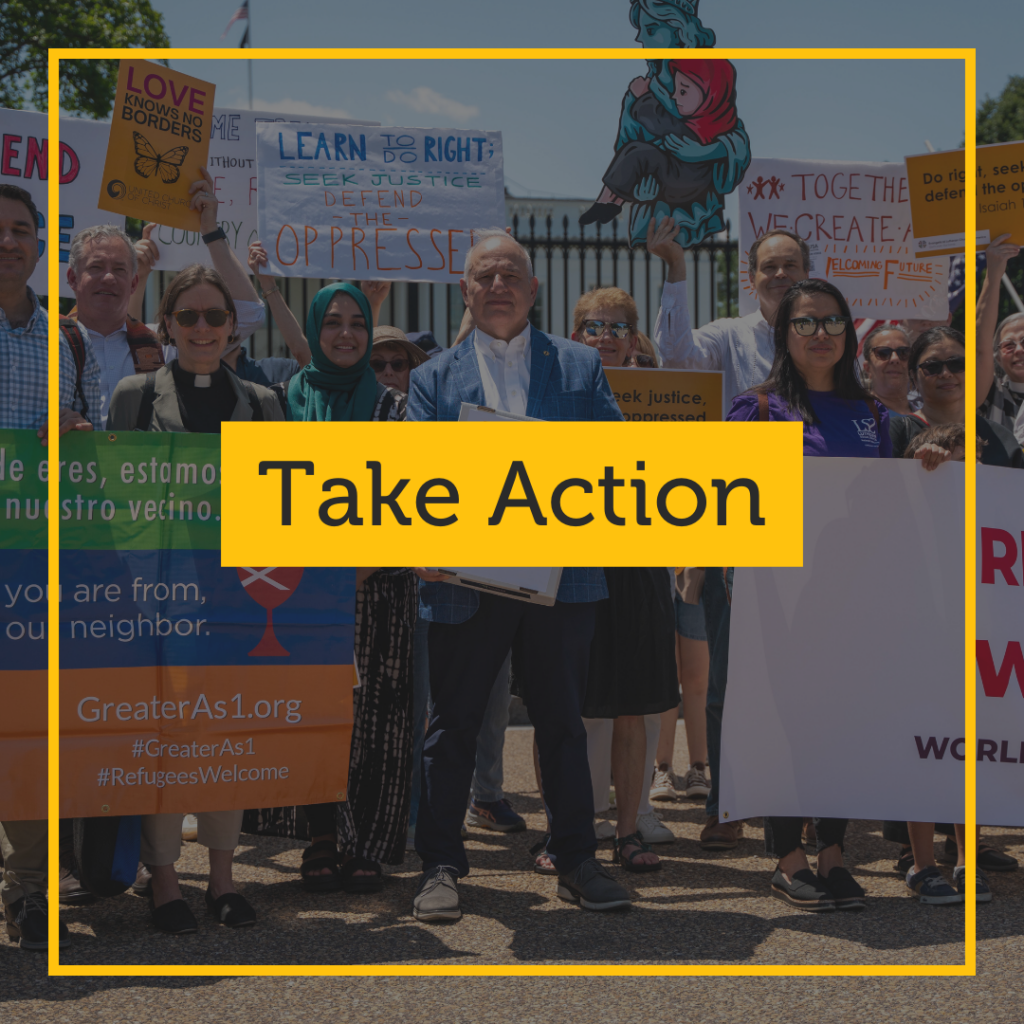
The Trump administration’s indefinite refugee ban, stop work orders and prolonged delays in reimbursement for resettlement agencies have had a devastating impact on tens of thousands of refugee families and communities across the country and around the world. Welcome to the latest edition of State of Play from Church World Service. This resource will provide regular updates from the CWS Policy Team on the current state of play; updated asks for national, state and local leaders; and the latest headlines and community resources.
Breaking: Documents confirm scope of administration’s “Operation PARRIS” effort to target refugees. A series of documents that IRAP obtained show that the Department of Homeland Security (DHS) targeted, arrested and detained 72 Minnesota refugees via a USCIS program focused on reexamining refugee cases. The documents describe the operation in Minnesota as a “pilot” and “model for additional vetting operations.” They also show that as of last October, there were 185,539 refugees without green cards in the U.S. who could be at risk of being targeted as USCIS’s “re-vetting” efforts expand.
The news comes at the same time that new polling from the Refugee Advocacy Lab, Data for Progress, and Refugees International shows that two in three voters (67%) say that the U.S. should have a refugee program that helps people seeking refuge reach safety.
The latest: Administration investigates over 150 voter-supporting organizations; a U.S. citizen sues the government a year after immigration agent shot her seven times; ICE pushes for another increase in arrests.
Immigration and Customs Enforcement (ICE) has investigated over 150 organizations and obtained tens of millions of voter roll records in search of alleged voter fraud. ICE’s Homeland Security Investigations (HSI) has conducted sweeping investigations into nonprofits and accessed sensitive voter data in furtherance of the administration’s crusade to root out nearly nonexistent noncitizen voting. Documents show that the agency targeted a range of organizations across the country that encourage voting or help people register to vote. The documents – which Democracy Forward obtained through a records request – name at least some of the targeted organizations, but others appear to be redacted.
HSI has also considered sending undercover agents to infiltrate organizations that it suspects of “illegal alien registration and voter encouragement” so they can “gather evidence, disrupt activities, and trace financial backing and support structures.” Pennsylvania and New Jersey “remain areas of focus” for potential undercover investigations, according to a memo dated June 1.
The tranche of documents also show that ICE has access to a massive amount of voter data: DHS official Heather Honey provided 48.4 million voter roll records that HSI says she received via “independent sources of information.” The Department of Justice sent additional records to ICE that contain information about 50 million voters. HSI may have entered some of the data into a system developed by the defense contractor Palantir that ICE has used to target neighborhoods.
Separately, ICE has reportedly added a question to its detention booking intake system to ask people who are newly detained whether they have voted illegally.
“This trove of ICE documents provides chilling new insights into the breadth and depth of the Trump-Vance administration’s efforts to pursue baseless claims of widespread election fraud,” said Hart Wood, Senior Oversight Counsel at Democracy Forward in a statement.
It is possible to vote safely, including – in many states – early, by mail, or via ballot drop box. Learn more about voting with CWS’s multilingual resources, check your voter registration status, know your rights as a voter, and make a plan to vote.
U.S. citizen files suit after a federal agent shot her last year. During an enforcement surge on Chicago last year, a Customs and Border Protection (CBP) agent shot Marimar Martinez seven times. Martinez had been on her way to donate clothes to a local church on October 4, 2025 when she realized that a nearby vehicle had three federal agents who appeared to be participating in “Operation Midway Blitz.” She followed the vehicle, honking her horn and calling out to warn passers-by. Eventually the driver of the CBP vehicle struck her car and then shot her from behind. On October 5, she filed a lawsuit alleging that the agent lied about the shooting, falsely claiming that Martinez was moving toward him as he shot her. Martinez’s attorneys cite forensic evidence that indicates otherwise.
The lawsuit notes that less than three hours after she arrived at the hospital, agents from the Federal Bureau of Investigations (FBI) arrested her on charges of assaulting, resisting, or impeding federal officers. She was discharged from the hospital and taken to an FBI office building while still unable to walk and bleeding through her bandages, the lawsuit says. Prosecutors later dropped the charges against her. In multiple instances, the government has filed, and then later dropped, charges against people after immigration agents arrested them.
At a press conference on Monday, Martinez said, “what’s happening is not normal. We shouldn’t stay here and normalize what’s happening.”
ICE tells officers to increase immigration arrests. On Tuesday, ICE told officers across the country to increase immigration arrests by 1,000 people each day, according to reporting in CNN. The move to raise the daily arrest goal follows record arrest numbers this summer and comes at a time that many elected Republicans have expressed unease with the Trump administration’s aggressive enforcement tactics. New polling shows widespread public opposition to the government’s spending on mass deportation.
“Once you start deporting people who have otherwise been here without incident for 15, 20 years, that’s a gray zone that I think where you find a lot of division of opinion,” Senator John Cornyn (R-TX) told The Hill. Senator Cornyn, who lost his primary to Texas Attorney General Ken Paxton, added, “I always thought that this idea of mass deportations sent the wrong message.” Retiring North Carolina Senator Thom Tillis, also a Republican, added, “aside from it being politically dumb, it’s immoral, in my opinion.” Public opposition to immigration enforcement has created challenges for electorally vulnerable Republicans, who have worked to distance themselves from the administration’s tactics. Rep. Monica De La Cruz, a Texas Republican, released an ad this month featuring a woman celebrating Rep. De La Cruz’s work to secure her husband’s release from immigration detention.
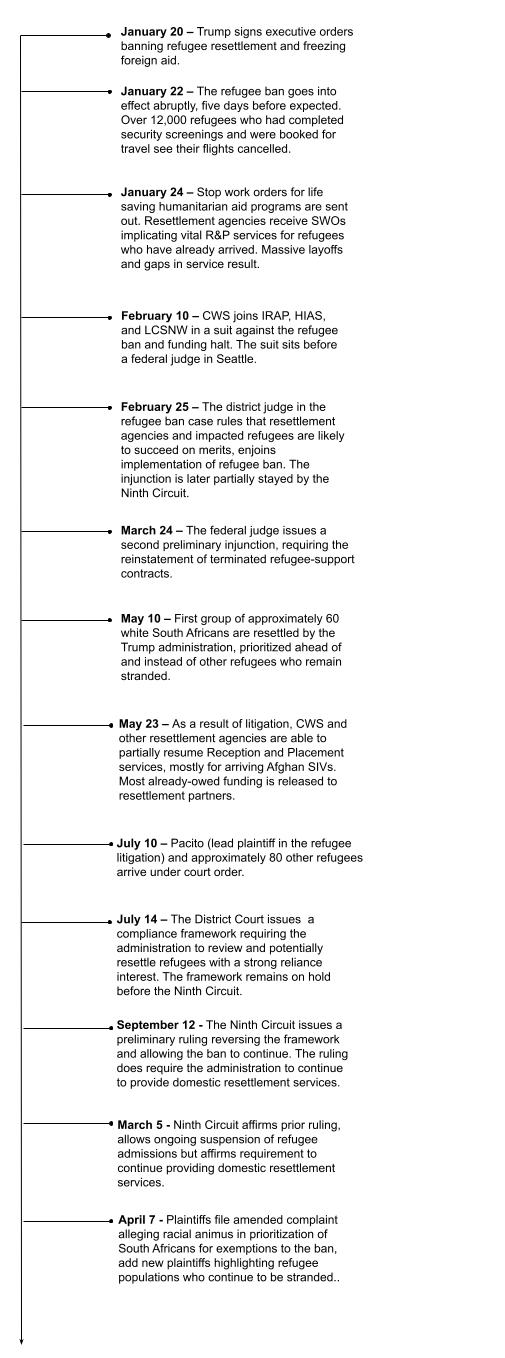
Latest Headlines:
- NBC News: Trump administration will have government lawyers representing unaccompanied immigrant children
- The Washington Post: Anti-immigrant post fuels donations to Texas GOP candidate’s opponent
- Los Angeles Times: Private prison company sues California over civil rights law for immigrant detainees
- Bangor Daily News: ICE detained a Maine immigrant’s wife, then let him trade places
- KUOW: Japanese Americans in Seattle embark on 4-day pilgrimage to immigrant detention sites
Opportunities to Take Action:
- CWS Action Alert: Demand Justice and Accountability After ICE Shootings
- CWS Action Alert: Urge Your Elected Leaders to Fight for Refugees Ahead of Upcoming Presidential Determination on Refugee Admissions
- CWS Action Alert: Protect Immigrant Children: Urge Congress to Demand Safety and Due Process
- CWS Action Alert: Urge Your Members of Congress to Pass the Protecting Sensitive Locations Act
- CWS Action Alert: Urge Your Senators to Pass Legislation to Protect Haitian TPS Holders
- CWS Action Alert: With All Eyes on Iran, Palestinians Continue to Suffer Daily Attacks and Constant Hunger
- Sign Petition to the White House: Keep Our Promise to Refugees
- CWS Action Alert: Tell Your State Lawmakers – Do Not Let Refugees & Other Newcomers Go Hungry as Federal SNAP Cuts Take Effect
Community Resources:
- Welcome.US Free Citizenship Tutoring: A trained volunteer will meet with you one-on-one to practice civics questions, English conversation, and the citizenship interview. Citizen Guide can be used on its own or as extra practice alongside a citizenship or English class. Sign up for Citizen Guide or email learner@welcome.us with questions.
- CWS: Lakou Tanama Virtual Haitian Healing Spaces
- Georgetown Collaborative on Global Children’s Issues: Explainer for Parents and Their Helpers Seeking Family Reunification
- NILC: Public Charge: Frequently Asked Questions for Immigration Advocates
- Restoring Dignity: Pathways to Financial Stability resources
- CLINIC: Parish Toolkit: Supporting Immigrants in a Time of Need
- CWS: Ten Major Immigration and Refugee Policy Changes Since January 2025
- CWS: Bill Summary of the Protecting Sensitive Locations Act
- Refugee Storytellers Collective: Making Informed Decisions: A Risk Assessment Worksheet for Public Engagement
- ACLU: Enforcement at the Airport
- United Church of Christ: Love Knows No Borders Resources
- IRAP: Refugee Re-vetting and Detention
- USAHello: Multilingual Immigration Guide with clear, direct-to-community information
- IRAP: What do the recent U.S. immigration changes mean for Afghans?
- NILC: How to Find a Loved One After a U.S. Immigration Arrest and What to Do if Arrested or Detained by Immigration
- CWS: How the One Big Beautiful Bill Will Impact You
- Just Security: Litigation Tracker: Legal Challenges to Trump Administration Actions
Stories of Impact:
Fran: “The wait has become endless. A year of processes, of dreams of a better life, of yearning for security and stability for my family. Venezuela, a country that once was home, became a place where workplace persecution forced me to seek refuge elsewhere. One of my sons was also enrolled in the program and he went ahead, and we had hope of reuniting, and when they had already requested our travel documents and we were in the process of buying plane tickets the USRAP prohibition came into effect, freezing our plans. Months of anxiety, of uncertainty, of unanswered questions: When will we be able to be together again? The distance is a weight we carry, a constant reminder of what we have yet to achieve. Uncertainty is a lonely path, but the hope of reuniting with my son is what drives me to move forward, not to lose faith in a future where we can be together and safe.”
Samuel: “My name is Samuel. I was approved by USCIS as a refugee in March 2024, and since September of that year I had a U.S. resettlement agency assigned to my case. I currently live in a third country with my partner, with whom I have shared a stable relationship for more than eleven years. In January 2025, I was called to repeat my medical exams, but only a few days later everything was suspended after the change of government in the United States. Since then, our process has been frozen, and we remain stranded without clear answers — with our suitcases full of hope, waiting for the moment to finally travel. These months have been emotionally very hard. Living for so long in uncertainty, unable to move forward or plan for the future, has deeply affected our mental and emotional well-being. As an LGBT refugee couple — and in my case, living with HIV — every day here brings constant challenges to our health, safety, and hope. Despite the pain and frustration, we continue to believe in the possibility of a better life. We share our story because we know we are not alone, and because behind every paused case there are human beings simply seeking safety, acceptance, and the chance to rebuild their lives with dignity.”
Find more stories of impact here, and watch this space for new stories as they arise. Have a story to share? You can share it with us via this form for refugees overseas or this form for refugees, immigrants and service providers in the U.S.