
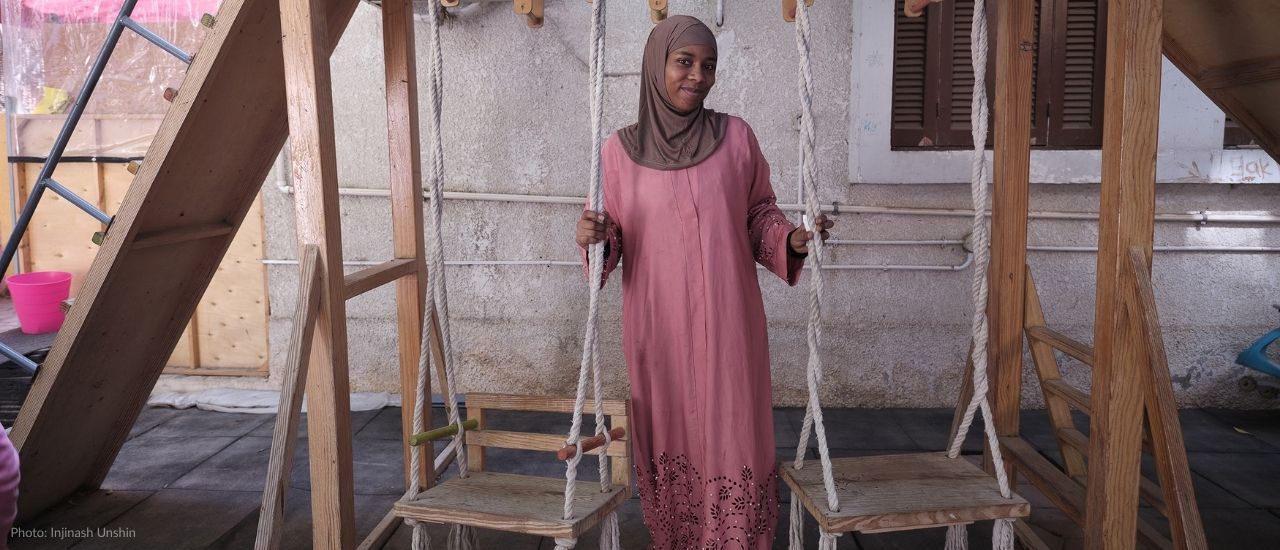
Today, CWS highlights the imperative to uphold global commitments to asylum and protection, while honoring the courage of the 41.6 million refugees around the world who have been forced to flee violence and persecution in search of safety.
“We must help others who are facing problems. The United States is a country of immigrants. The entire potential of the world is here.”
—Mr. Khan, CWS U.S. Resettlement Program client*
Global Displacement: Record Need, Rising Barriers
The scale of global displacement remains staggering. Today, one in 70 people worldwide has been forcibly displaced from their homes, and nearly 70 percent of refugees remain trapped in long-term exile, often for years or even decades.
By the end of 2025, 117.8 million people had been displaced due to violence, persecution and conflict. Of these, more than 41 million were refugees, 39 percent of whom are children. The number of displaced people worldwide is projected to rise to 136 million by the end of 2026.
Behind these figures are individuals and families uprooted by unresolved and escalating crises. Ongoing conflicts in Sudan, Syria, Gaza, Afghanistan, Ukraine and the Democratic Republic of Congo, among other regions, continue to force millions from their homes.
The right to seek asylum and safety is a lifeline. It is the difference between life and death for millions of refugees. Yet access to protection is becoming more constrained. Safe and legal pathways are limited, asylum systems are overwhelmed and many refugees are living in what were designed to be temporary settlements for decades, with inadequate shelter, constant risks to their health and safety and few, if any, opportunities to regain self-reliance, earn income and rebuild their lives.
Low- and middle-income countries host 68 percent of the world’s refugees and other people in need of international protection, often in regions neighboring the very crises people are fleeing. These host communities shoulder immense strains on housing, food and water, social services and infrastructure.
The result is a widening gap: More people need safety than ever before, but too few have a viable path to reach it.
Resettlement: A Lifeline Too Often Out of Reach
Resettlement is one of the most important tools for protecting refugees who face the greatest risks. It offers the most vulnerable refugees a path to safety, legal protections and the chance to rebuild their lives in a new community.
But resettlement often remains out of reach for those who need it most.
In 2025, only 81,800 people resettled to safe third countries like the United States—less than half of the 188,800 recorded the year before. The Trump administration set a record-low refugee admissions target of just 7,500 people and, as of May 21, 2026, increased the current ceiling by 10,000—still well-below historical norms—reserving the additional slots exclusively for white Afrikaners from South Africa.
Despite the international community’s commitment to resettle 120,000 people in 2026, an estimated 2.5 million refugees remain in need of resettlement. That means fewer than five percent of refugees in need will have access to this critical pathway, even if the international community meets the global targets.
Other safe regulated migration channels, such as those supporting family reunification, education and labor mobility, also play an important role in enhancing safety, but they remain limited in scale. Only 1.18 million permits were issued through these complementary pathways between 2019 and 2024, falling far short of the growing annual need affecting millions each year.
Looking Ahead: The State of Refugee Resettlement in 2027
New projections reinforce the scale of the challenge ahead. In 2027, the United Nations estimates that 2.37 million refugees across 76 countries will need resettlement.
- By countries of origin, Afghans, Syrians, South Sudanese, Sudanese and Rohingya refugees continue to face the greatest need.
- The highest needs are in the Asia Pacific region, representing over one-third of global demand.
- Iran, Türkiye, Pakistan, Ethiopia and Uganda host large numbers of refugees in need of resettlement.
This reflects a troubling reality: While overall projections of refugee resettlement in 2027 indicate a slight decline, this is not due to resolved crises but rather to shrinking protection space, protracted displacement and limited pathways to safety.
How CWS Supports Refugees Seeking Asylum and Protection
Every person deserves the opportunity to live in safety and dignity. CWS is one of only ten nonprofit organizations partnering with the U.S. government to support national refugee resettlement efforts through the U.S. Refugee Admissions Program.
CWS also operates the Resettlement Support Center in Africa, which guides all U.S.-bound refugees from sub-Saharan Africa through the long resettlement process and prepares them for their new lives in the United States through case processing, specialized cultural orientation and English language training.
Across our work, CWS supports people seeking refuge at every stage of their journey from danger to safety in the following ways.
- U.S. Resettlement and Welcome Services: Since our founding in 1946 in response to the refugee crisis following World War II, CWS has helped resettle more than 865,000 refugees in the United States. In the 80 years since, we have continued this legacy through a national network of 20 local offices and 24 affiliate partners, working alongside communities to provide reception, housing, employment support, legal services and long-term integration support.
- Global Humanitarian Assistance: Through partnerships with local organizations around the world, CWS delivers life-saving assistance and long-term support to people experiencing displacement, helping families in countries like Ukraine, Indonesia, Democratic Republic of Congo, Egypt, Haiti and Afghanistan, among others, meet their immediate needs and strengthen resilience.
- Advocacy for Access and Protection: CWS works to uphold the right to seek refuge as it is enshrined in U.S. and international refugee law. We advocate with U.S. and international policymakers to expand access to asylum, protection and resettlement; defend refugee rights; and ensure policies reflect compassion, justice and shared responsibility. Through civic engagement efforts and collaboration with coalitions such as the Refugee Council USA and the Interfaith Immigration Coalition, we help advance pro-refugee and pro-immigrant policies rooted in compassion, justice and shared responsibility.
- Challenging Unjust Policies: CWS is actively working to uphold refugee rights and restore access to protection in the United States, including advocating for the reopening of refugee pathways for those already approved but waiting to travel.
- Advancing Civic Engagement and Community Organizing: CWS equips refugees and immigrants with the tools they need to advocate as leaders in their local communities. We equip our growing network of 2,000+ immigrant and refugee leaders to build collective power in their communities through trainings on leadership development, community organizing, storytelling and team building.
At a time when pathways to safety are increasingly limited, CWS remains committed to expanding access and advocating for policies that support resettlement, so refugees are not only protected, but also welcomed and supported with dignity and safety as they rebuild their lives.
None of Us is Safe Until Everyone is Safe: Take Action On World Refugee Day
World Refugee Day is a moment to honor refugees—and to take action.
As a faith-based organization, this moment calls CWS to reaffirm what guides our work every day: walking alongside refugees, welcoming the stranger and respecting the worth and dignity of every person.
Today, the need to uphold asylum and protection is more urgent than ever. Tens of thousands of refugees who have already been legally approved for resettlement in the United States—including Afghans who served alongside the U.S. presence in Afghanistan, religious minorities and those fleeing some of the world’s most dire humanitarian crises—remain in limbo, denied the opportunity to rebuild their lives in safety.
CWS is meeting this moral call to action by advocating to restore and strengthen the U.S. Refugee Admissions Program and working alongside partners to ensure refugee pathways remain open and accessible. We continue to support impacted families and amplify refugee voices to push for policies that reflect our shared values of dignity, protection and welcome.
As we mark World Refugee Day, here are three ways you can get involved.
- Sign up to get involved in our Rise Up for Refuge initiative. Across the United States, refugee families are living in fear while facing increasing threats and dangerous dehumanizing rhetoric. Together, Americans of diverse faiths and backgrounds are rising up to defend welcome, compassion and the belief that our nation should protect the dignity and rights of every person.
- Take action by emailing or calling members of Congress to urge them to honor World Refugee Day by fighting for those who have been forced to flee from their homes. Our CWS Action Alert provides easy-to-use scripts and tools to directly contact your elected officials and advocate for displaced people.
- Donate to CWS to provide life-changing support for families who have been forced to flee their homes.
*After more than a decade of separation, the Khan family was finally reunited in Texas—a moment made possible through perseverance, community support and access to the U.S. refugee resettlement program. Their journey reflects both the resilience of refugee families and the life-changing impact of safe, legal pathways to protection.
But their story is also a reminder that too many families remain in limbo. With resettlement opportunities increasingly limited, it is critical that pathways like these remain open so more families can find safety, reunite with loved ones and rebuild their lives with dignity and hope.