
In Moldova, a partnership between CWS and local organization Zdorovii Gorod demonstrates how investing in local leadership can strengthen child protection, support displaced families and build more sustainable humanitarian responses.
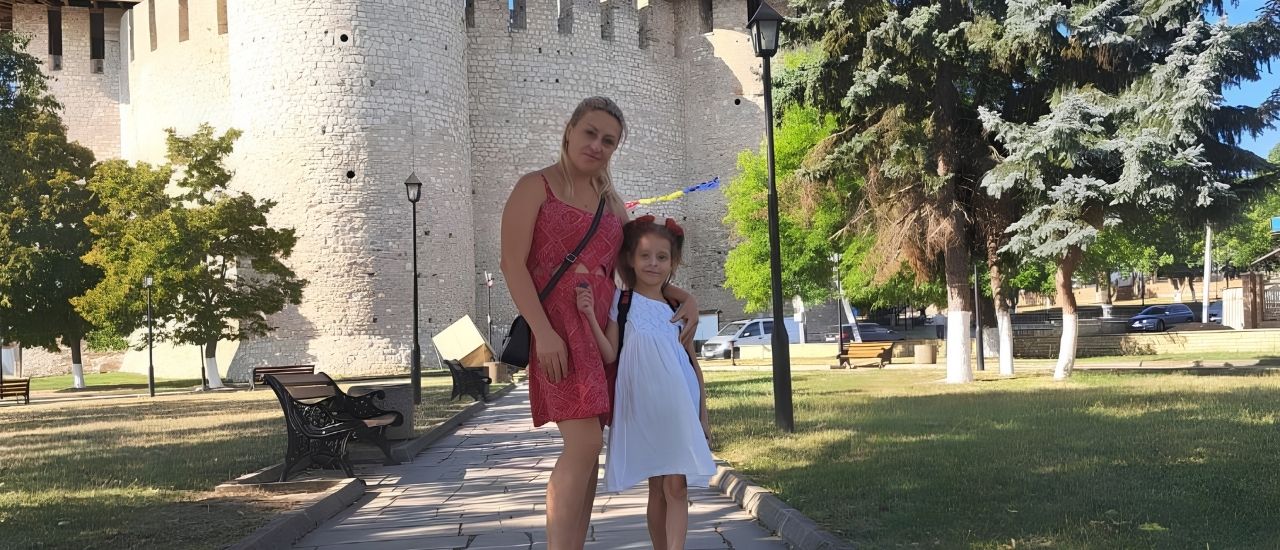
Oksana and her daughter Masha received medical care and additional support tailored to their needs from CWS local partner Zdorovii Gorod.
In times of conflict, children are especially vulnerable. Many are forced from their homes in search of safety and face prolonged displacement, disrupted education and limited access to health care and critical support networks. When protection systems break down, children are at heightened risks of trauma, exploitation and family separation.
According to the United Nations, nearly 2.6 million children have been displaced from their homes since Russia’s invasion of Ukraine in February 2022, including 1.8 million living as refugees outside Ukraine.
As the conflict continues to affect families across the region, protecting children remains a critical humanitarian priority that requires strong local coordination to understand community needs and respond quickly when children are at risk.
A new case study published by the Alliance for Child Protection in Humanitarian Action highlights how CWS’s partnership with Zdorovii Gorod in Balti, Moldova, strengthened local leadership while improving child protection outcomes.
Child Protection Begins with Local Leadership
Since 2022, CWS has partnered with Zdorovii Gorod to provide humanitarian assistance to Ukrainian refugees and socially vulnerable Moldovan households, including medical and psychosocial support, vocational opportunities and basic humanitarian aid.
While these services helped families meet immediate needs, the partnership also demonstrated a broader lesson: strong child protection systems are built through strong local leadership.
Localization is the process of shifting decision-making power, direct funding and leadership to local and national actors. Local organizations across Moldova have played a vital role in welcoming displaced families since the beginning of the conflict, helping them navigate services and ensuring children receive the support they need to recover and thrive.
Through localization efforts, organizations like Zdorovii Gorod gain the resources, training and support needed to strengthen their role within child protection systems. Their deep community connections allow them to identify risks earlier, build trust with families and connect children to services more quickly.
The Long-Term Impacts of Localization
Investing in local organizations can strengthen child protection far beyond the life of a single project. Through its partnership with CWS, Zdorovii Gorod expanded its role within Moldova’s child protection system while building on the trust it had already established within the community through the following efforts:
- Customized Trainings: CWS designed training with Zdorovii Gorod staff based on real child protection cases, using roleplay and culturally relevant scenarios. This included referral pathways, mandated reporting and safeguarding policies.
- Joint Case Troubleshooting: CWS and Zdorovii Gorod worked together to resolve difficult child protection cases, creating space for open dialogue on frustrations with system gaps.
- Network Building: Zdorovii Gorod built relationships with local and international government actors, including UNHCR and UNICEF, to eliminate barriers caused by multi-agency communication.
As a result, Zdorovii Gorod evolved from a local service provider into a recognized and trusted actor in Moldova’s social assistance and child protection systems. When local organizations have the resources, training and relationships they need to lead, children can benefit from faster, safer and more effective support.
Recommendations for Action: Expanding Localization Efforts
The case study identified several key lessons in prioritizing investment in local organizations to strengthen humanitarian support:
- Local ownership drives sustainability. Investing in local organizations helps build child protection systems that are trusted by communities and capable of lasting well beyond emergency response efforts.
- Capacity building must be tailored. Effective training is interactive, context-specific, culturally appropriate and rooted in local realities rather than generic approaches.
- Strong relationships accelerate protection outcomes. Direct connections between local organizations, government institutions and UN agencies help reduce barriers and enable faster responses for children at risk, while providing spaces to acknowledge existing system gaps.
- Localization requires resources. Meaningful participation depends on adequate funding for staff time, transportation and engagement in child protection coordination systems.
Together, these lessons reinforce a simple but powerful truth: the people closest to a community are often best positioned to provide support.
CWS partners with local organizations around the world who prioritize community-led responses to hunger, poverty, displacement and disaster. With nearly 80 years of expertise, we have taken a leadership role in shaping and implementing high-quality, community-led, multisectoral programs that promote dignity, resilience, belonging and equality.
Masha’s Story: Finding a Safe Path Forward
The impact of this approach can be seen in the story of Oksana and her daughter Masha.
When war broke out, Oksana was forced to flee Ukraine with her six-year-old daughter in search of safety. After arriving in Balti, they were welcomed by members of the local community, who provided food, clothing and support during an uncertain time.
Oksana and Masha were eventually referred to Zdorovii Gorod, where they received medical care and additional support tailored to their needs. Understanding the significant emotional impact conflict can have on children, the organization also connected Masha with psychosocial services designed to help her cope with the trauma of displacement.
“Today, I look at my daughter and believe that she will have a future without fear,” said Oksana. “Thanks to you, we have survived a difficult time and have kept hope alive.”
Their story illustrates why child protection matters. When children feel safe, supported and connected to their communities, they are better able to heal, learn and pursue their hopes for the future.
Humanitarian Action is Strongest When Local Communities Lead
On World Humanitarian Day, the partnership between CWS and Zdorovii Gorod reminds us that the future of humanitarian response depends not only on meeting urgent needs, but on investing in the local leaders and protection systems that help communities recover, rebuild and thrive.
Because when local organizations are empowered to lead, humanitarian action becomes more effective, more sustainable and more deeply rooted in the communities it seeks to serve.
For 80 years, CWS has worked alongside local partners to respond to hunger, poverty, displacement and disaster with a commitment to dignity, protection and community-led solutions. In Ukraine, Moldova and around the world, that legacy continues through our commitment to strengthening child protection systems and ensuring local organizations have the resources and support they need to protect children and walk alongside families for the long term.
Read the full case study here. To learn more about CWS’s Ukraine response efforts, click here.