
This story was originally published by Vanguard Law Magazine on September 21, 2026. You can find the original version here.

Alina Marquez Reynolds, General Counsel for Church World Service
Alina Marquez Reynolds had just completed her first year of law school when she walked into the Kings County District Attorney’s office for a summer internship and felt something click into place. She was assigned to work alongside prosecutors trying real cases, learning the rhythms of a courtroom from the inside, and by the time the internship ended, she knew exactly what she wanted to do with her law degree. The office’s leader at the time was Elizabeth Holtzman, a trailblazing figure whose career left a lasting impression on the young intern. That early exposure to public service, to victims seeking justice and lawyers fighting to secure it, set Reynolds on a path that would eventually lead her to a mission far from the courtroom, but built on the same foundation of advocacy and trust.
Today, Reynolds serves as general counsel for Church World Service (CWS), a faith-based humanitarian organization marking its 80th anniversary this year. Founded in the aftermath of World War II to help refugees rebuild their lives, CWS has grown into a global organization addressing hunger, poverty, displacement, and disaster, with particular attention to refugees and immigrants seeking safety and stability. As the first general counsel in the organization’s history, Reynolds oversees all legal and compliance matters, sits on the executive leadership team, and manages a network of outside counsel that extends her small internal footprint across a large and complex operation. Eight decades after its founding, the organization’s core commitment to compassion, justice, and service remains unchanged, even as the world it operates in has grown more complicated.
A Career Built on Trial Experience
Before joining CWS in April 2024, Reynolds spent nearly 25 years as an Assistant United States Attorney in Connecticut, following five years at the Kings County DA’s office. She built her career in the criminal division, focusing on violent crime in close coordination with the FBI, the DEA, and “safe streets” task forces comprised of federal, state and local law enforcement agencies working together to dismantle complex criminal networks. She tried 25 federal cases to verdict and handled the appeals that followed, work she credits with teaching her how to make fast, high-stakes judgment calls under pressure. Much of her time in Connecticut centered on the Violence Against Women Act, building on experience she gained at the DA’s office in one of the country’s first specialized domestic violence units, and reinforcing a career-long commitment to public service that went beyond simply winning cases. She partnered with service providers and advocates to expand access to justice for victims and survivors of domestic and sexual violence and human trafficking, and to raise awareness about these crimes that are often hidden in plain sight.
“There is a public service aspect of it that drew me to giving back to the community,” she says.
Stepping into the newly created general counsel role at CWS meant working across teams to help strengthen a legal and compliance infrastructure inside an organization with an 80-year history but no prior in-house lawyer. Reynolds works as a team of one internally, which makes her relationships with outside counsel essential to keeping pace with the organization’s operational needs. She advises on regulatory compliance, governance, risk management, and the international dimensions of CWS’s work, all while embedding legal considerations into decisions made across the organization.
“The skills you develop as a litigator are so transferable to an in-house role,” she says.
Standing up for Refugee Protections
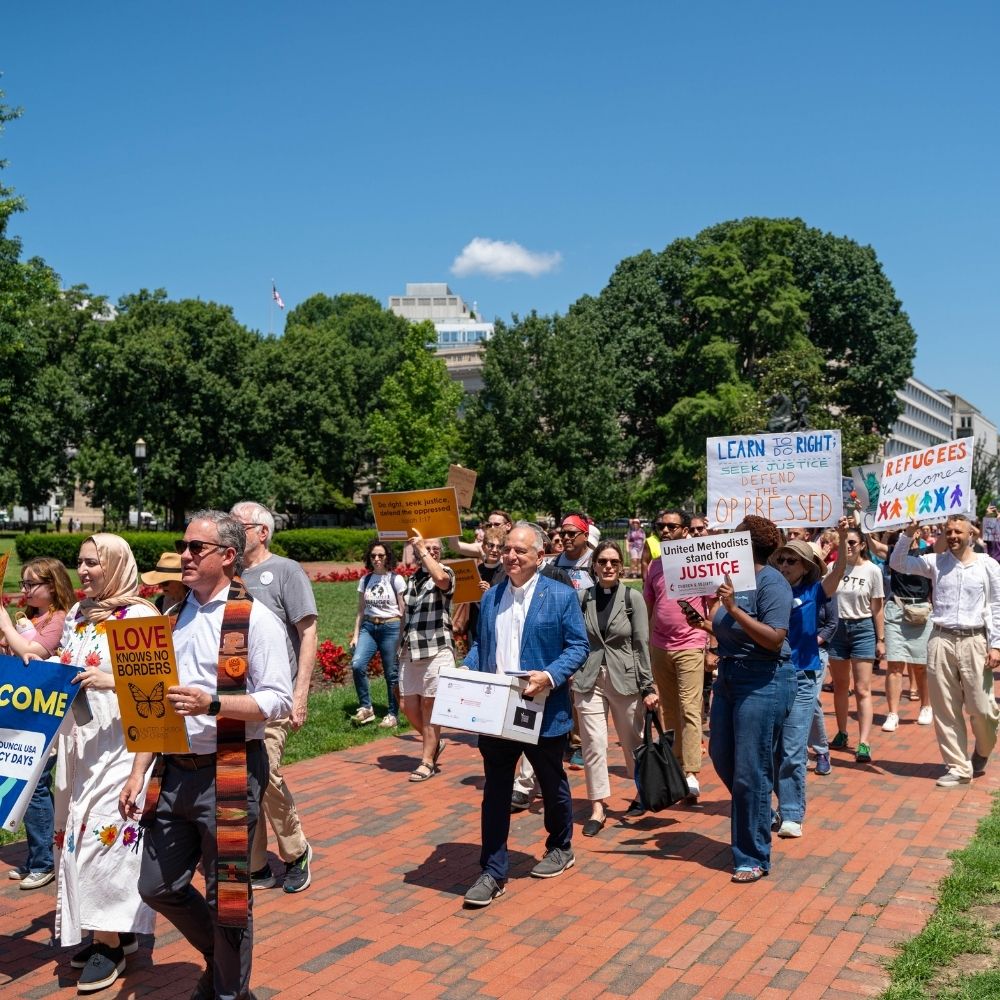
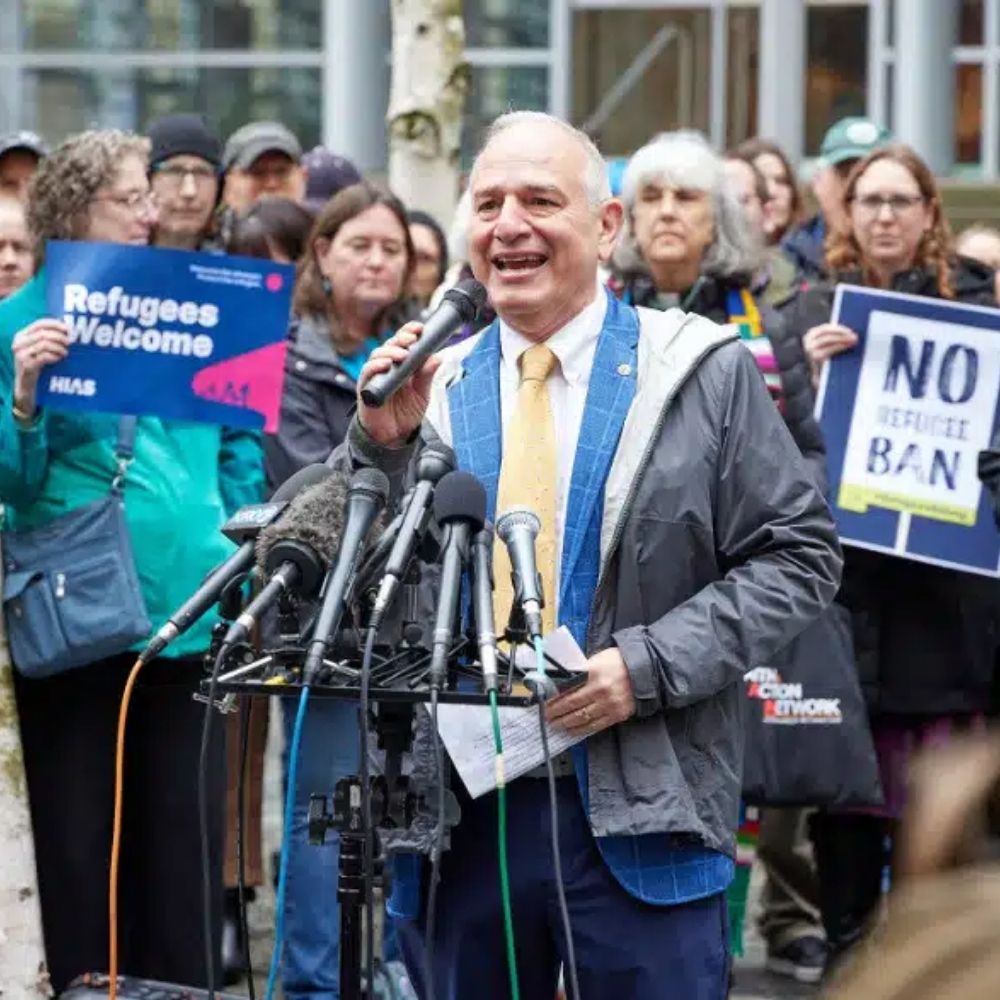
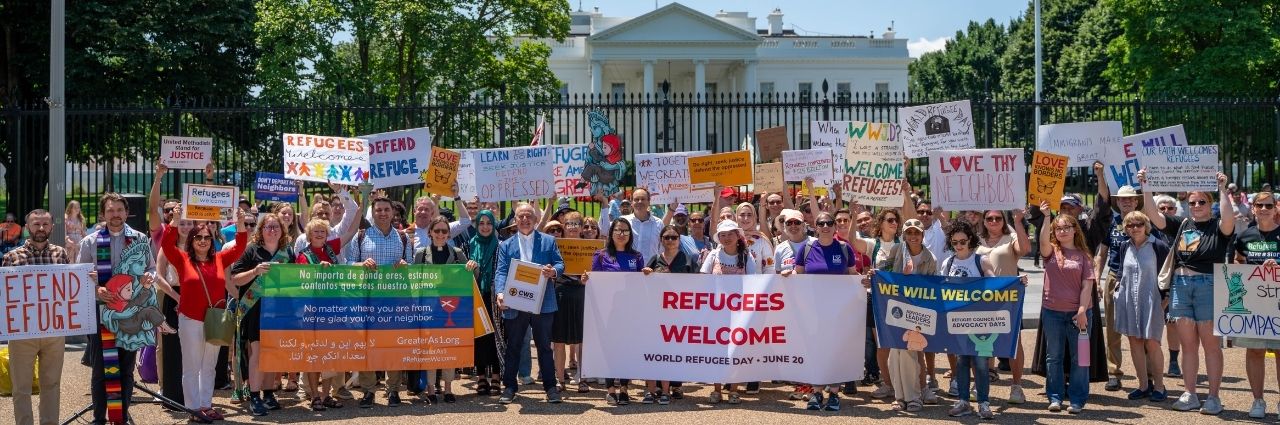
The stakes tied to Reynolds’s work have only intensified as federal policy around refugee admissions has shifted. When an executive order suspended refugee admissions into the country, CWS became one of three organizations to sign onto a lawsuit challenging the action, a decision Reynolds describes as consistent with the organization’s history of standing up when it matters most. The organization also provides legal services, housing assistance, and employment support to refugees affected by the current policy. This is work that is central to the CWS mission of defending fundamental human rights.
“We don’t want to go down without a fight,” she says.
For Reynolds, the mission carries personal weight. Born in Barranquilla, Colombia, and raised across Pennsylvania, Puerto Rico, and Venezuela, she comes from a family that left Cuba, with her brothers and her among the first in their family to attend college. Her college thesis examined the Cuban diaspora, a subject she says was never far from her own life experience.
“Diversity of experience and perspective is helpful to any organization and to the world,” she says.
That personal history informs how she thinks about the current moment, one she believes is defined by policies designed to create fear and confusion among immigrant communities. Reynolds sees part of her role as helping CWS’s efforts to change that narrative, as it leverages grassroots partnerships with churches and community organizations to educate the public and to restore the refugee admissions program to what it once represented, an effort she and her colleagues view as historically bipartisan rather than politically divisive.
Looking Toward the Next 80 Years
As CWS celebrates eight decades of service, Reynolds is focused on ensuring the organization can adapt to who it serves and how it serves them, while protecting itself against the legal and operational risks of an increasingly complex environment. She continues to draw on lessons from her prosecutorial career, including a piece of advice from a former USAO supervisor in CT that has stayed with her throughout her transition into humanitarian legal work.
“If you haven’t lost a case, you haven’t tried enough cases,” she says.
That willingness to take on hard fights, win or lose, has defined Reynolds’s career from her earliest days in a Brooklyn courtroom to her current role guiding an organization built to welcome those seeking safety. It is a career shaped as much by mentorship as by trial experience, and Reynolds now finds herself on the other side of that relationship, making time to guide younger lawyers the way so many colleagues she was privileged to work with influenced her own path.
As CWS moves through its anniversary year and into the next chapter of its mission, Reynolds remains focused on the same principle that drew her into public service in the first place: using the law not to accumulate wins, but to protect people who need protecting, for as long as the fight requires.